
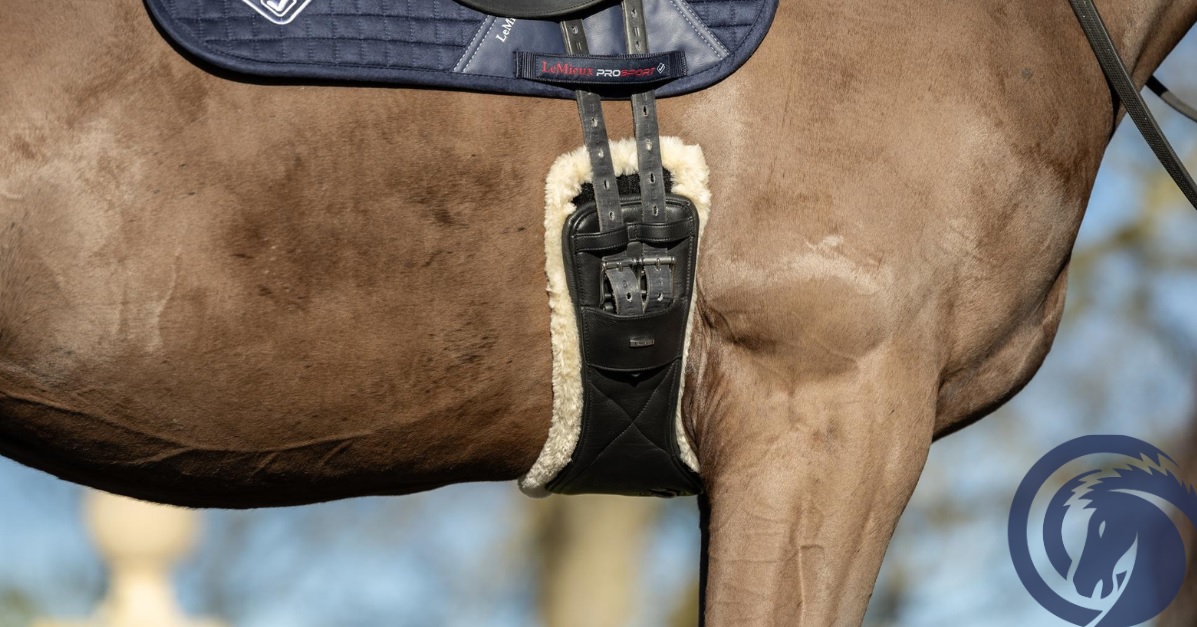
The right girth fit can make all the difference – not only for your balance but also your horse’s comfort. We’ve all experienced the struggle: the saddle slipping when the girth won’t go tight enough, or nearly giving ourselves a black eye or bloody nose trying to reach those elusive buckle holes! Luckily, it doesn’t have to be that way. Here’s a simple guide to understanding girth fit, how to measure for a new girth, and whether you need a short or long one for your saddle.
Why Girth Fit Matters
A well-fitting girth does more than hold your saddle in place. It prevents rubbing, pressure points, and slipping — all of which can cause discomfort or even behavioural issues in your horse. If the girth is too short, the buckles can sit uncomfortably close to the elbows. Too long, and you might struggle to secure the saddle properly. Getting the fit right keeps both you and your horse safe, comfortable, and happy.
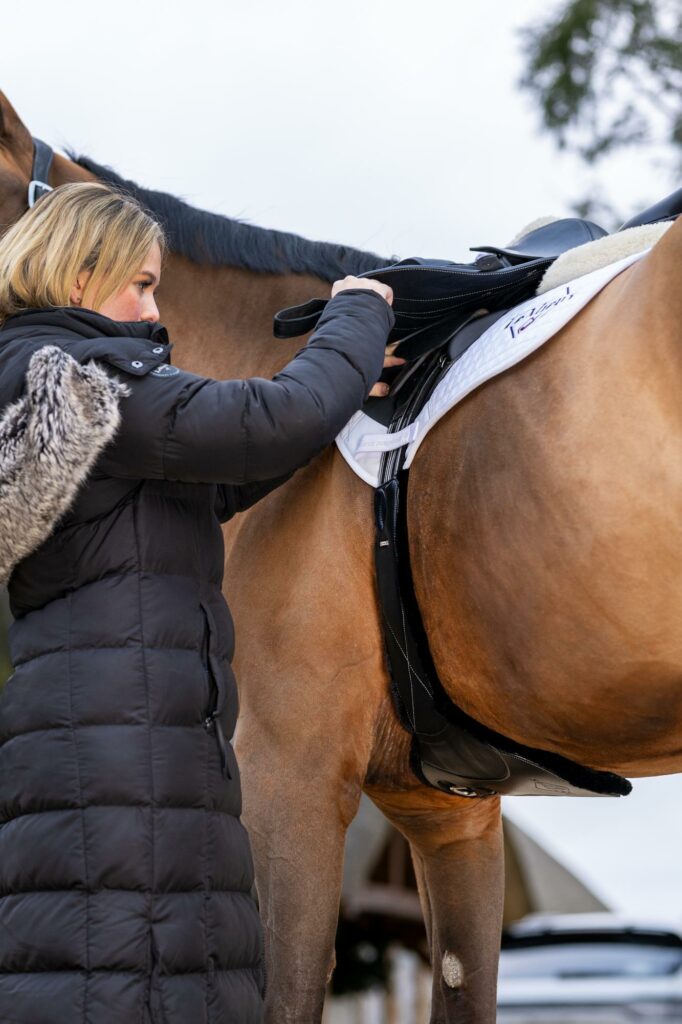
Short vs Long Girths
- Long Girths
- Used with general purpose and jump saddles.
- Designed to reach from underneath the horse up to the saddle’s billets, with the buckles sitting neatly under the saddle flap.
- Typical length: 100–145 cm depending on your horse.
- Short Girths
- Typically used with dressage and monoflap saddles, which have longer billets.
- Buckles sit higher up on the horse’s side, well away from the elbow.
- Usual length: 40–80 cm depending on your horse.
- Think of it this way: long billets = short girth, short billets = long girth.
How Should a Girth Fit?
- The buckles should sit a hand’s width above the elbow (for long girths, tucked under the flap; for short girths, just below the saddle flap).
- Aim for the girth to fasten on the 2nd or 3rd billet hole from the bottom on each side if you are using a long girth.
- Once tightened, the girth should feel snug but not restrictive — you should be able to slide two fingers between the girth and your horse.
How to Measure for a New Girth
Measuring properly saves the stress of endless trial and error. Here’s a step-by-step guide:
- Pop your saddle on your horse with any pads you use underneath, and use your current girth (if you have one).
- Check where the buckles sit:
- For a long girth: buckles should be under the flap, above the elbow.
- For a short girth: buckles should be below the flap, clear of the elbow.
- Measure with a fabric measuring tape: from the middle hole of one billet strap, underneath your horse, to the middle hole of the billet on the opposite side. You will need someone to help you!
- Round to the nearest size: girths are usually sold in 5 cm (2 inch) increments.
- Don’t forget that girths are measured from the end of the buckle to the end of the buckle, not the material end to end.
- If you’re measuring your old girth and it is elasticated, it will stretch over time.
Handy Tips
- Always measure with the saddle in place — saddle design affects girth length.
- Remember, leather girths stretch slightly, so if you’re between sizes, choose the smaller one.
- Re-measure if your horse’s shape changes — for example, with seasonal weight gain, muscle development, or a change of saddle.
Final Thoughts
Choosing the right girth length isn’t just about convenience — it’s about keeping your horse comfortable and your saddle secure. Whether you ride in a dressage saddle with a short girth or a GP saddle with a long one, taking a few minutes to measure correctly will save you frustration in the long run (and save you from any more close calls while girthing up!). We would love to hear what girth you use in the comments section below!


