
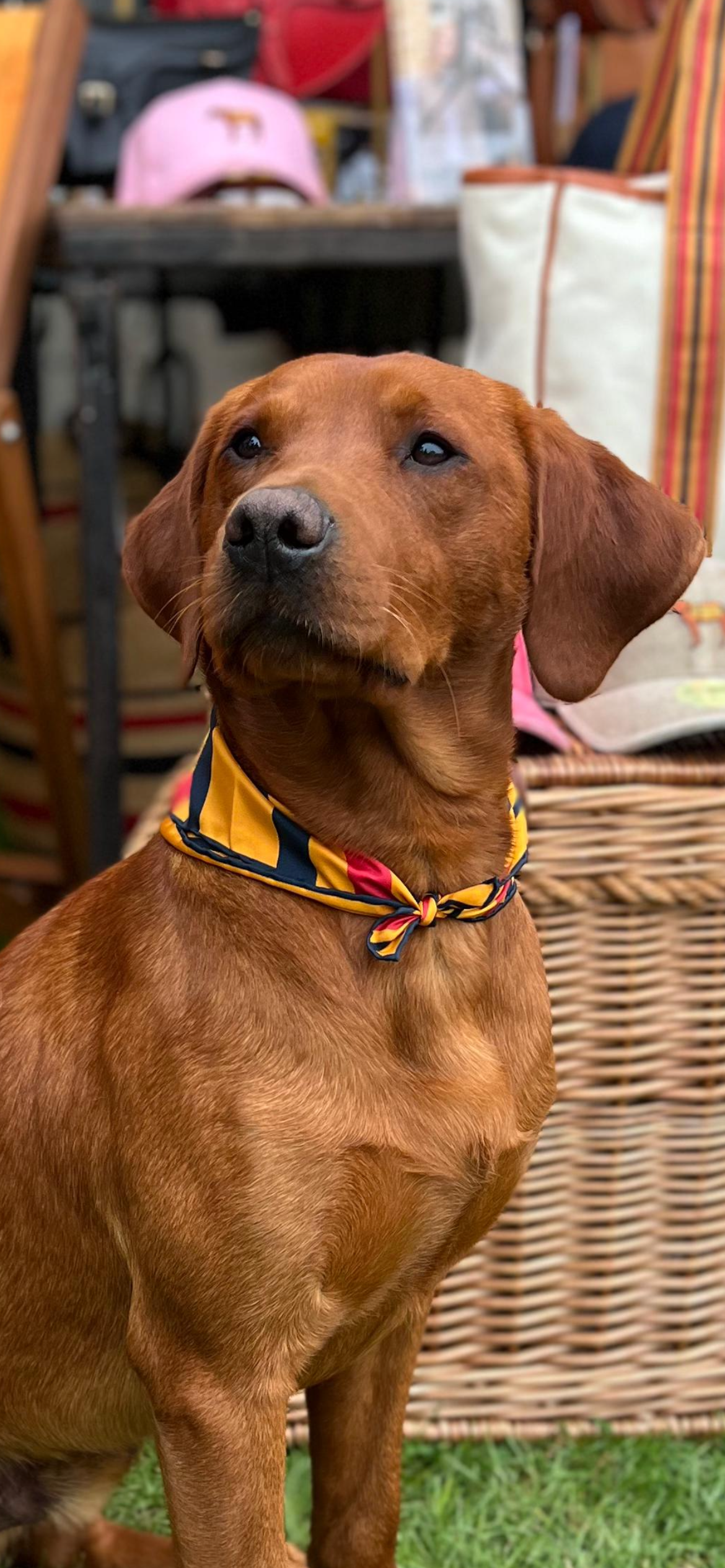
Most Monday morning’s in my life at 0815 are fairly predictable, I say that but when you have a menagerie of animals, anything can happen! It was a lovely morning, the chores were finished and I was about to get my first coffee when things went wrong! Two weeks ago today, our morning went leftfield, in a way I never expected. My fox red Labrador, Dingo (who many of our in store customers will have met), crossed paths with a muntjac deer, and what followed was a terrifying reminder that nature isn’t always as “cute” as it looks.
The Secret Weapon of the Muntjac
When most people think of deer, they think of antlers. However, many will be surprised to learn that muntjac have tusks. These elongated upper canine teeth are sharp, formidable weapons that they don’t hesitate to use when they feel cornered or threatened.
While they might look like small, harmless visitors to our gardens and woods (when they’re not eating your plants or stripping the bark off young trees!), a muntjac can be incredibly defensive. Unfortunately, Dingo found this out the hard way.
The Incident and the Injury
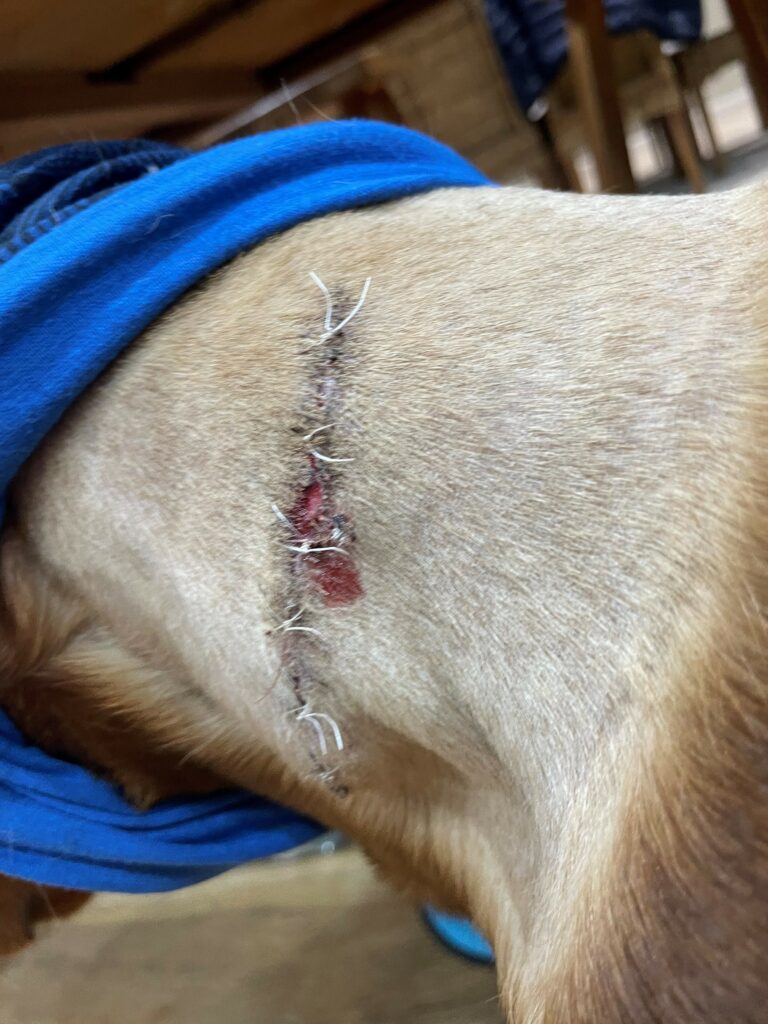
The attack was swift. The muntjac’s tusk didn’t just graze Dingo; it hooked under the skin and punctured into the left side of his neck.
We are very fortunate that Ash Tree Vets are close to us and that they open at 0830. So we piled into the car and rushed him to the vet. Looking back, we are incredibly relieved that the muntjac missed his throat and injured him on the top of his neck. It could have been much worse.
The Road to Recovery
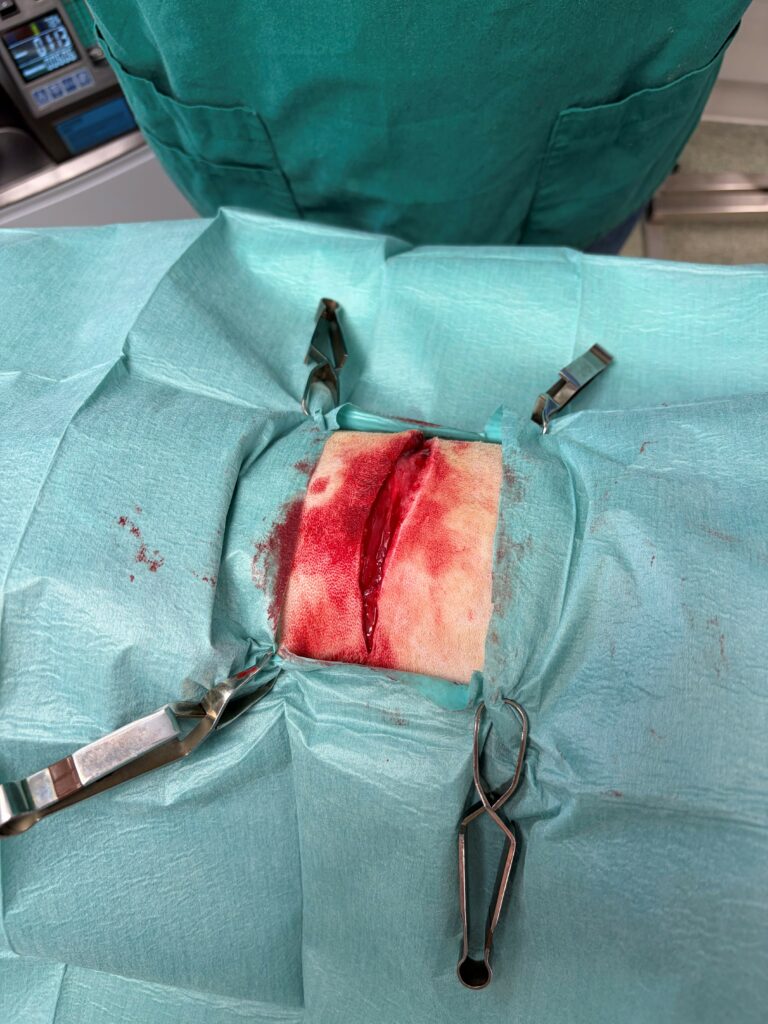
We owe a massive thank you to the team at Ash Tree Vets. Dingo required emergency surgery to clean and repair the injury. It actually was worse than we initially thought once the vet had him on the table.
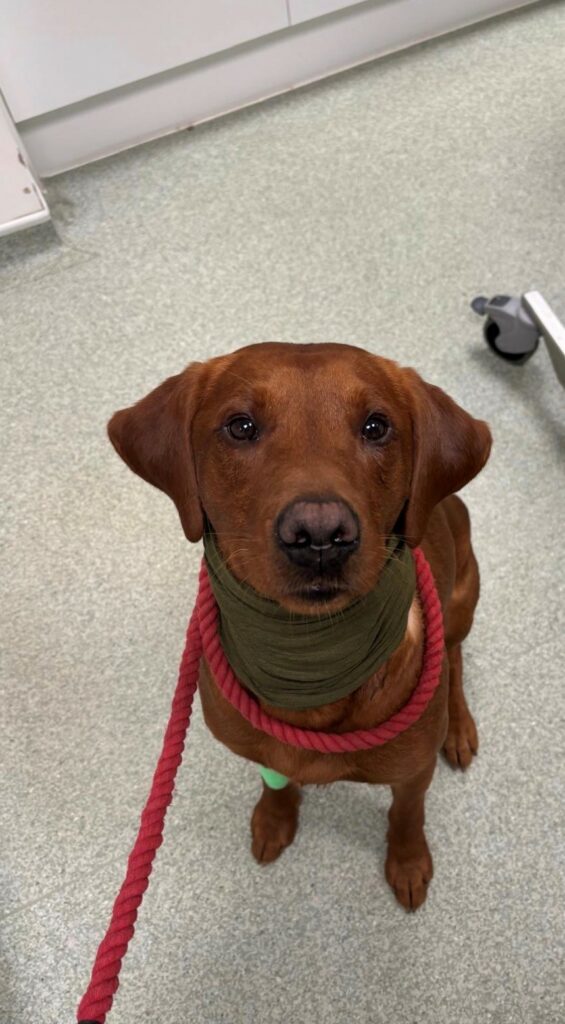
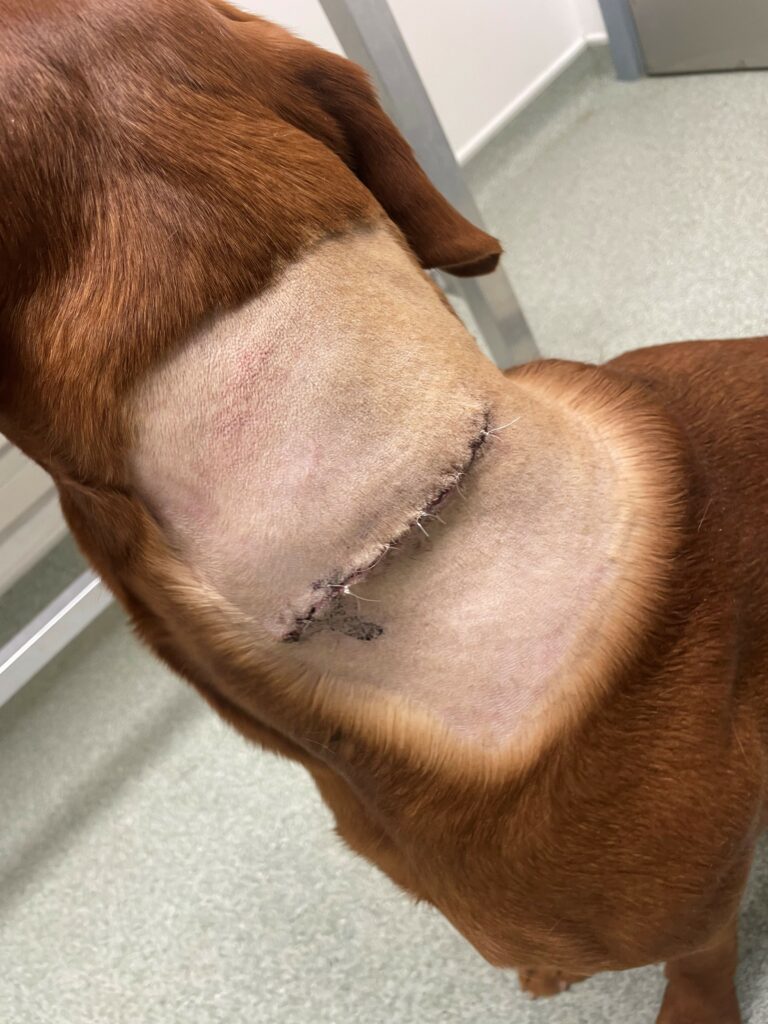
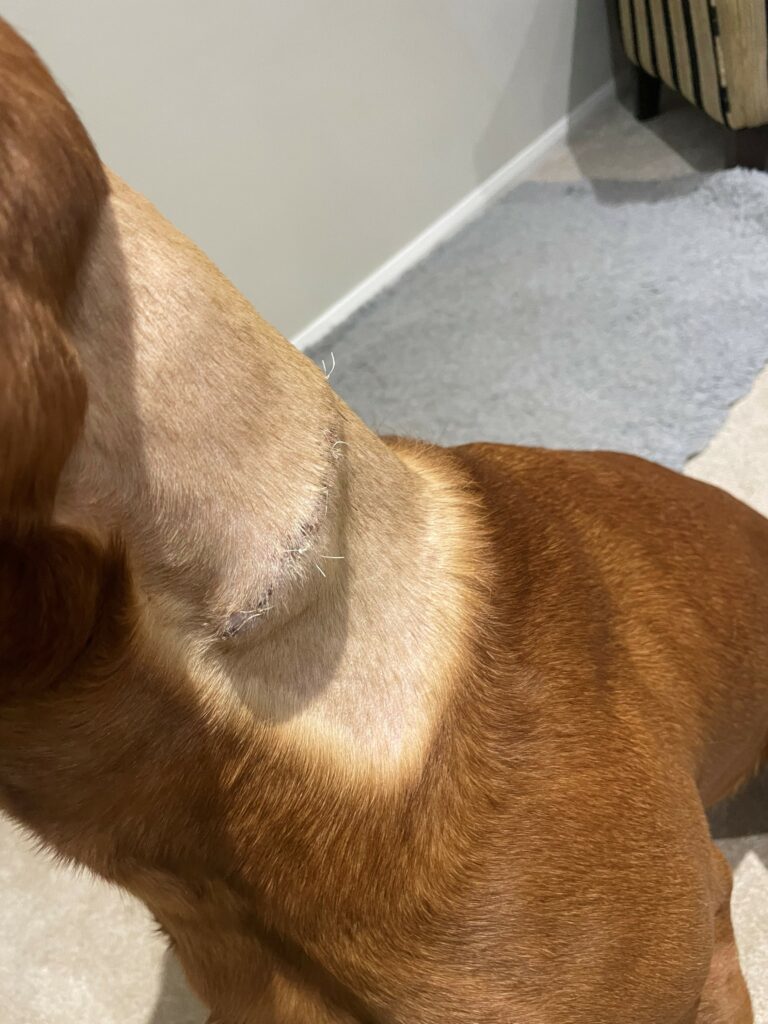
Today marks exactly two weeks since the incident, and we have some good news: Dingo has just had his sutures out! We actually used a BUFF from the shop to stop anything catching his neck and it worked a treat.
The Healing Process
The wound is healing nicely, though it’s still a bit “lumpy” in the spots where the puncture was deepest.
- What’s Next: Our vet assured us this is normal; the wound is still doing its “repair work,” and the raised areas will settle as the healing continues.
A Lesson for Dog Owners
If there is one thing I want fellow dog owners to take away from our scare, it’s to respect the “diminutive” muntjac. Keep a close eye on the undergrowth, especially during those early morning walks when wildlife is most active.
Dingo is being a model patient and is mostly just happy to be getting extra treats during his recovery. We’re looking forward to getting back to our normal, quiet Monday mornings, minus the drama!


